Showing posts with label alternative. Show all posts

Tuesday, 6 October 2009

Review: The Life Of The World To Come by The Mountain Goats


Of Beginnings

A bassy, palm-muted, minimalist acoustic guitar. Dabbings of bass drum and an occasional hissing, rattling hi-hat. The Life Of The World To Come by The Mountain Goats starts brilliantly. Lyrically, the opening is similarly strong:

I became a crystal healer
and my ministry was to the sick
creeping vines would send out runners
and seek me in their numbers
I sold self-help tapes
Go down to the netherworld, plant grapes

It's been a while since my attention was so rapaciously grabbed by the first few bars of an album. And the first song ('1 Samuel 15:23') is, I'd say, pretty much faultless. An intense, enigmatic lyrical voice. Sparse instrumentation extremely skilfully recorded and superbly produced. Brooding, ominous. Unshakeably it establishes a thickly pervasive atmosphere for the entire record. Sets (if you will) the stage. It's as good an opener as 'Airbag' is to ok computer.

And that's good.

So – how about you download an mp3 of 1 Samuel 15:23 by the Mountain Goats? Come back when you're done, won't you?


Of Good Music

Good music means something to its producers. It's not just spewed out from refinery to factory to outlet.

Good music demands; it communicates. Expresses.

And The Life Of The World To Come is the most interesting album I've listened to since Bill Callahan's Sometimes I Wish We Were An Eagle. World To Come isn't as clever (from a literary point of view, or with respect to its songcraft) as Eagle. But it's cleverer than most. And, in common with Callahan's record, it is saturated with powerful, intense, thoroughly sincere emotion.

Now, Heavy Soil doesn't know about you, but Heavy Soil grows immensely tired of the capriciously ironical 'whimsy' and trendily self-aware posturing that dominates the alternative/folkish musical genres.

So a bit of emotional saturation goes down very well with us.


Of Versatility

Musically, the early stages of the record demonstrate a good deal of versatility: the sparseness of the opener gives way (excellently) to the spitting, pulsing, juddering momentum of 'Psalms 40:2'. As the album progresses, there's less pronounced contrast between songs (a pity), but musical imaginativeness is evident in some lovely string arrangements (don't expect swooning orchestral lines: these are sparse, dry, intelligent.)

And one of the most commendable of the features on display is musical restraint. Download an mp3 of the lovely Hebrews 11:40, won't you? Notice the point (around 2:20) at which the arrangement swells toward a climax, only to pull back at the last moment.

Excellent.


Of themes
(always the most boring and obvious part of an English essay, so I'll keep it short)

The Life Of The World To Come is, conceptually, a very tight album. It is unified by clear and consistent themes – the clearest of which (revealed by a single glance at the 100% biblical tracklisting) is religion/faith. We'll come back to this later – you bet.

Less overtly, the songs are bound together by strands of imagery (cars, sickness, the domestic) and feeling (detachment, introspection, passivity). This is a very cohesive piece of work. And imbuing the whole record is a narrative (played out without linearity) of death and bereavement.


Of theological wrangling

So, it's going pretty well, so far. You'll be surprised then, perhaps, to discover that The Life Of The World To Come has nevertheless been giving me – your beloved reviewer – some trouble.

'Romans 10:9' is the crux of it. Without ado, here's the chorus:

If you will believe in your heart
And confess with your lips
Surely you will be saved one day

Uh huh.

Now, my review-writing muse – an enigmatic character known only as FieldVole – was pretty down on this. She called it 'Praise music'. And, in isolation, that's a criticism (and boy did she mean it as a criticism…) I cannot counter. I don't much like pop songs of the ilk implied by those lyrics above. It reminds me of awful freshers' week experiences. Christian Rock.

But hold on a minute. Wasn't it TS Eliot that wrote –

Pray for us sinners now and at the hour of our death
Pray for us now and at the hour of our death

– and suchlike? Yes, it was indeed. Of course, there's no comparison between the two in terms of poetry (Eliot's lines are brilliantly written); but it's clear enough that Eliot (along with many, many other poets and novelists whom I admire) produce work that explicitly deals with Christian faith and the issues surrounding it.

So I should be clear: I have absolutely no problem with art – be it a poem, a song or a painting – that's created from an explicitly religious perspective. I would never decry a creative work because it was written from a Christian perspective. 'Ash Wednesday' (from which those above lines of Eliot's are quoted) is one of my favourite poems.

The problem with 'Romans 10:9', though, is that it is bland. Not only lyrically, but also musically (over to FieldVole again, who crushingly pointed out the song's slight whiff of 'keyboard demo'. Ouch.) And so much else on this album is far from bland. Indeed, 'Romans' is so bland that, on my first few listens, I didn't even notice it. And was preparing myself to write a resoundingly positive review of the album.

Then FieldVole came in with her 'Praise Music' jibes. And I had to think again.


There's a defence (of course there's a defence: there's always a defence). Here's the chorus of 'Philippians 3:20-21':

Nice people say he has gone home to God now
Safe in his arms, safe in his arms
But the voices of the angels singing to him in his last hours with us:
Smoke alarms. Smoke alarms.

The idea is, then, that we're being led through a series of perspectives on questions of faith. The 'Smoke alarms' is our moment of camera-panning-out-to-an-empty-room objectivity. The grounding. It's like the end of Lord of the Flies (the novel, yeh?), at which we see the warring boys suddenly and powerfully through the eyes of the first and only adult in the novel.

A WHOOOMP-type moment.

So this treatment of faith – at once exploratory and sceptical – gives us a cue to take a song like 'Romans 10:9' (the bland one, right? I know: all these biblical names may make for conceptual unity, but they're bloody confusing) as just representative of one perspective. One voice. It's not supposed (I assume) to be preachy.

Problem is, it's just not a particularly convincing song. Sorry.


Of Non-Blandness

But I want to return to this: there are some truly superb things on this record. And let it be indicative of my overall feeling that I choose to close on this note.

First off, the album's final song, 'Ezekiel 7 and the Permanent Efficacy Of Grace', is brilliant. It draws together the themes and imagery (it seems to me) in an almost faultless way. And it's musically sparse, haunting, atmospheric. A mirror image of the opening.


And, finally, let's talk about 'Matthew 25:21', which I'd take to be the record's core. It charts the journey of the narrator for a last visit to a terminally ill person (a relative, we presume). The first time I listened to the album, I was not prepared for the intensity of this song – and the degree to which, by the time it played, my attention had been transfixed. Emotionally, it is sparingly effective. And lyrically. Lyrically, it is very, very good. Here's the best bit of the whole album. Right here:

I felt all the details
Carving out space in my head
Tropicanas on the walkway
Neon red.

This is fucking excellent. Absolutely superb. It's why I love literature. Because it simply, elegantly, unfussily describes a sensation that is both complex and 100% familiar and convincing: in this instance, the foreknowledge of nostalgia to come.

If only this kind of lyrical pellucidity could carry through to those small islets of blandness. That's all I want to say.

Monday, 7 September 2009

Self-promotion: new Cogwheel Dogs EP out today


Dear blogreaders, may I open with an apology: this blog has been a bit quiet, lately. The desertification is, however, soon to be reversed – with a verdant influx of music: I've a review or two on the boil (amuse-bouche: the new Mountain Goats album looks to be very, very worthwhile indeed).

But for today, I have a little ardent self-promotion to be getting on with.

The band in which I play cello (variously referred to as 'laser cello', 'distortion cello' or 'is that a cello?') is called Cogwheel Dogs. And we have released an EP today, entitled Greenhorn.


The music? It's folksy art-grunge, in a nutshell. Or maybe experimento chamber-blues. Who can say?


The EP might clock in at less than 15 minutes, but there’s a hell of a lot crammed in here. The twin forces of Mosley’s bewitching voice - which can go from little girl lost to demented she-devil like the flick of a switch (often in the space of the same song) - and Parnell’s unrestrained, ultra-distorted cello are the band‘s strongest weapons. On opening song ‘Kitchen’, the two combine to create a sinister, menacing atmosphere that hangs around Greenhorn like a morning fog that won‘t quite lift.

The EP starts off with an egg slicer and ends with saliva on an envelope. The in-between? Download it (for free, for free, for free) for yourself and make up your own mind.

Here's the linky to the whole of Greenhorn EP (zip file), and here are the individual tracks as mp3s:


Like? Subscribe to the Cogwheel Dogs blog for future updates.

That's it. Self-promotion over. I'll get back to writing about other people's stuff, now.

Tuesday, 2 June 2009

Review: Dragonslayer by Sunset Rubdown


So – later this month, Sunset Rubdown release their new record, Dragonslayer.

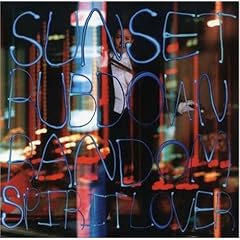
My first acquaintance with Sunset Rubdown came in the form of their previous album, Random Spirit Lover. I still remember sitting on a dark coach (sadly, the petrol-propelled rather than horse-drawn variety) gazing at the smeared lights of London through a window lashed by the rain, with wildly cascading scales and arpeggios ringing in my ears, and feeling myself suddenly encaptivated.

(It was only later that the congruence between that view through my window and the album's artwork struck me.)

Amongst other things, I loved the witty juxtapositions of sound, key and lyric. Most of all, I loved its joyous haphazardness, its infectious mania. It was definitely one of my favourite albums of 2007 (2007? Bloody hell, that's two years ago!) – and sparked an ongoing admiration for the band.

So you may well imagine that I have been eagerly anticipating Dragonslayer. And I stubbornly refuse to apologise for the fact that I shall doubtless be measuring it up, herebelow, against the yardstick of Random Spirit Lover.


Okay then, Heavy Soil – get out your yardstick

First song 'Silver Moons' establishes the pace in the same way that the excellent 'The Mending of the Gown' did for 'Random Spirit Lover'. But where 'The Mending...' was helter-skelter, bubbling over, madly inventive, scarcely contained, 'Silver Moons' is measured, atmospheric, grandiloquent. There's a heaviness here that's quite a departure from Random Spirit Lover's flightiness.

To me, the record approaches, at times, the sound of Wolf Parade (one of lead vocalist Spencer Krug's several other musical outfits).

And with the move away from flightiness, there's also a move in the direction of higher-fi. That's not to say that this is a glossily produced release – but the rawness of Random Spirit Lover (with its grittily massive kick drum sounds and oh-so-brittle guitars) is decidedly tamed, here – resulting, perhaps, in a more balanced mix ... but (to Heavy Soil's ears) one that's also less charming, more conventional.

The band recaptures the thrill of the earlier album fitfully. 'You Go On Ahead (Trumpet Trumpet II)' kicks satisfyingly into its outro, with the sense of surging into a home straight ... And there's still musical wit in here. The little guitar soloed snatch of 'We Wish You A Merry Christmas' in 'Silver Moons', the pass-the-parcel countermelodies of 'Apollo And The Buffalo And Anna Anna Anaa Oh!'...


So, yes, let's talk about more of the good stuff

'Idiot Heart' is a standout track – possibly the album's best (we've already written about the song in isolation, but – for your convenience, here's a link to Idiot Heart mp3). 'Black Swan' is also pretty kickin', with its eerily insistent taps, snaps and clicks, and sudden tempestuous gusts of sweeping melody. It's no coincidence, I suspect, that these are two of the record's most uptempo and dynamically varied songs.


The heavy sinuousness of closing track 'Dragon's Lair' (= Dragonslayer, if you say it aloud, see?) is handled well, and the song justifies its ten-and-a-half-minute length, as themes (both lyrical and melodic) are teased out and organically developed.

And there are still those ebullient surges into Casio toy keyboard tomfoolery – but they're somehow a bit more sensible, a bit less adventurous, a bit more subdued.


Subdued, you say?

Yes, subdued.

Everything about this record feels safer than Random Spirit Lover. And perhaps that means more people will like it [what do you mean, 'jadedly cynical'? This is a music blog, damn it: what did you expect?]. But Sunset Rubdown have taken a step away from the territory that made them so interesting to me.

That's not to say there's nothing new here. There's more extensive (and effective) use of Camilla Wynne Ingr's backing vocals, which often superbly offset Spencer Krug's reedy squawks. And there's perhaps more consideration given to the delicacies of arrangement and mix – a more transparent sound – which allows details to shine through.

But there's nothing here that surprises me.

And I like surprises.

(Surprise presents are particularly nice. Postal address provided on request.)


So what you're saying is ...?

What I'm saying is: this is quite a good album. If I hadn't been bewitched and betwitched by Random Spirit Lover and were coming at this afresh, it would certainly be strong enough to make me take notice. It's just that, relative to the slapdash brilliance of the band's earlier work, it's slightly disappointing.

Get this: not enormously disappointing. Just slightly.


The omnipresent disclaimer: the mp3s herefromlinked are provided to allow you better to gain an impression of Sunset Rubdown's work. If you like, 'em, please go and preorder the album (Amazon UK)

Wednesday, 6 May 2009

Review: Random Spirit Lover by Sunset Rubdown


Once again from the archives, this is another review that I originally wrote, something more than a year ago, I believe, for MOG but which that site's redesign has rendered painful to read. So I reproduce it here. It'll also link (in the seamless manner you've come to expect) to the next Musikhorizon song – due tomorrow.


Wit in music.

Not in lyrics, which is easy enough – but in the way one chord leads to another, or a melody appears, or pauses are used. It's a rare phenomenon: one found in the work of classical composers such as Handel and Joseph Haydn, say. A (rather more modern) witty album, in my opinion, is Weezer's Pinkerton (leagues better than anything else by the band) – and Sunset Rubdown’s Random Spirit Lover reminds me, in some ways, of that record.

To start off by comparing Sunset Rubdown to Weezer is (to put it mildly) potentially misleading. These two bands are not coming from the same place. But the ebullient, inventive playfulness – coupled with musical intelligence tempered with irreverence – is common.

And, despite the many differences between the bands, there is also a certain similarity in sound between Random Spirit Lover and Pinkerton (which, if you don't know it, is quite, quite different from Weezer’s more recent, heavily produced releases).

A brittle, unproduced, spindly quality.

Defining Sunset Rubdown's musical wit isn't necessarily easy. Much of the time, it's to do with juxtapositions and an almost slapdash approach to traditional musical devices. Keys change with abandon (just as they do, brilliantly, in Weezer's 'Across the Sea'), and, at times, the music puts me in mind of an excitable school music class, all of whom have unplugged their keyboards while practising (and messing around with) their scales and arpeggios.

Which, of course, would actually sound awful.

But here, it doesn't: Random Spirit Lover isn’t ever cacophanous. There’s even a certain strange, deliberate cheesiness to it all, with its retro synth sounds and scale-based melodies. Which, again, might sound derogatory – but is in fact laudatory.


Troubadour synth-pop

Before I allow the cement to dry around my Weezer comparison, I should note that Sunset Rubdown’s music is far more experimental and eclectic. On the latter quality, indeed, few artists or bands successfully combine aspects of everything from troubadour-esque, quasi-Medieval balladry, through Music Hall, to 80s synth-pop. This outstanding ability to bring together disparate musical elements sets the band alongside artists such as Joanna Newsom – different though their respective 'sounds' and influences may be. There's a baseline of irreverence and deliberate messiness, backed up by strong musicianship, that is reminiscent of The Dresden Dolls – and a marriage between traditional rock instrumentation and the unashamedly synthetic that makes the band sound, at times, ever so slightly like Grandaddy (albeit Grandaddy on speed).


Hugely energetic, idiosyncratic, inventive – it's one of the best opening tracks I've heard. As throughout the album, melodic instruments (guitar or synth leads) feature prominently. Set-piece solos are rare, with these intricate, rather fragile melodic lines instead being woven into the texture of the whole song, often cleverly offsetting the vocals. Lead instruments, then, are integral, not gratuitous.


Lo-fi-electro-intellipunk jig

Elsewhere, there is further proof of adventurous eclecticism: 'Up on Your Leopard, Upon the End of Your Feral Days' might be best described as a lo-fi-electro-intellipunk jig, with its vaguely courtly feel even (appropriately, given the lyrical content). 'For the Pier (and dead shimmering)', meanwhile, is a kind of jerky, arpeggiator-laced take on Rogers & Hammerstein ('When You Walk Through a Storm').

'The Courtesan Has Sung' pairs sparsely-set vocal imitation (a kind of 'round') with martial rhythms – and then, when the rest of the instruments enter halfway through, there is a fantastic effect of sudden 'grounding' – new and unexpected life is added to the melodies.

An entirely different vocal texture – male and female vocals, doubled an octave apart and blended into a curiously androgynous hybrid – is explored in 'Colt Stands Up, Grows Horns'. (The band Mew does something similar, at times.) Then, the song blossoms into a dark, retro delayed-synth interlude—vaguely prog-rockish, but with far better chord changes. The result is brilliantly atmospheric, like instrumental music to a lo-fi indie science fiction movie.

Lyrics are often abstract, literary and somewhat opaque. But, when they need to be, they are clear, powerful – and brilliant:

But the pattern of flight is chaotic and blind
but it's right
Because chaos is yours and it's mine;
And chaos is luck, and like love, and love blind.

And – just to show that the band's wit isn't limited to the music alone – note the self-referential touch of the device called Verfremdungseffekt (or, more prosaically, according to wikipedia, 'alienation effect') – so beloved of absurdist theatre:

And explosions make debris
and catching it kind of suits you
well it doesn't suit me
She said, "My sails are flapping in the wind."
I said, "Can I use that in a song?"
She said, "I mean the end begins."
I said, "I know. Can I use that too?"

Listening to Random Spirit Lover, it is sometimes easy, in fact, to forget that these are songs – so well-considered and cleverly paced is the album. Tracks merge into one-another so that, often, inter-song transitions are barely noticeable – despite drawing on such disparate influences and sources, and vary so considerably in almost any musical sense. Impressively, dramatic and attention-holding variations in tempo, rhythm, key and arrangement are nevertheless bound seamlessly into a balanced, unified whole.

Seldom, I think, have I come across an album that successfully – entirely convincingly – covers so much musical ground, yet loses none of its focus and integrity. Excellent, and – I predict – enduringly interesting and rewarding.

Saturday, 18 April 2009

PJ Harvey & John Parish -- Live

A couple of days ago (on Thursday night, to be precise), Heavy Soil was fortunate enough to witness the musicmaking of Ms PJ Harvey and Mr J Parish (and band), in Oxford Brookes Student Union. Take a glance at the following video, courtesy of petemanning1975, for a wee taste:


I twittered my impressions as follows (if you want chronological sense, go from the bottom up):

... So, yes, it was rather good. Though I couldn't help but think: if PJH is this good live when playing only collaborative numbers (the songs were taken from just the two albums released jointly by PJH + Parish, with no PJH solo material), she'd be friggin' excellent doing her own stuff.

I like the PJH/Parish music, but it generally (taken as a whole) lacks the variety and intensity of the solo albums.


Monday, 27 October 2008

Free Eels with strings. And caps lock.

Eels fans are already spoilt for rarities, thanks to the release of Useless Trinkets, earlier this year (er ... hmm ... strictly speaking, though, they ain't all that 'rare', are they, once they've been included on a major release compilation?).

Now, though, they have the chance to get their probably-not-all-that-grubby mitts on yet more music.

A 'DELUXE NUMBERED & SIGNED 4 LP EDITION - LIMITED TO 2500' of the lovely Blinking Lights and Other Revelations ships tomorrow, according to the band website.

(Caps lock, eh? Who doesn't love it?)

So, this release consists of Blinking Lights... reproduced on 3 LPs, plus (on the fourth) an 'exclusive 17 track live album, MANCHESTER 2005'.

Right now, you can download four free mp3s taken from this live collection – featuring some nice strings. Hurry, though, won't you? Apparently, these tracks are only available until Tuesday (tomorrow).

Here's the link to the free Eels mp3s. Once you've recovered from the colour scheme and 'interesting' font choices, look for the beigeish box on the lower left.

For the lazy or cautious, though, here's Heavy Soil's pick of the four:

Video sucks

Perhaps, dear Soiler, you will remember an earlier post about Ultralash's World of Suck. Fucked-up, poker-faced Sinead O'Connor, we called it.

Well, this very morning I received an email from Karry Walker (= Ultralash) with a link to her new video for the song. Filmed 'via cellphone camera'.

Take a looky.


If this piques your interest (and I hope it does), check out my review of Ultralash's album Foamy Lather – which I highly recommend.

The album, I mean.

(... Oh, what the hell ... Yeh, I recommend the review, too.)

This is an artist who is boldly experimental, uncontrived, idiosyncratic. Heavy Soil very much digs the homemade vibe that permeates her work (the above video very much included).

And, yes, soil can dig as well as be dug, thank you very much.

Wednesday, 15 October 2008

Grizzly Bear covers dead relative


Most of Grizzly Bear's album Yellow House was recorded in the (ramshackle) house of vocalist Ed Droste. Although the arrangements are fairly complex, and production is at times painstaking, it is still very much imbued with the feel of that house. So the album title is fitting.

Today's song of the day – Marla (download mp3 via YouSendIt) – is particularly interesting, having been written not by the band, but by Droste's great aunt – a "failed musician that [died] at an early age in the 1940s".

I'm not sure how many other bands have covered songs by deceased great aunts. Any offers?

Anyhow, this is rather a lovely, atmospheric, wearily melancholic song.

Listen to the creaks of the piano stool – and the woolly-yet-gongy tones of a damp old piano. There's a very nice subtle string arrangement, and all the ambient touches and subtly-mixed effects and sounds that are actually so hard to capture.

Beautiful shivery strings at 2.17 (and the way in which the figure is echoed by the piano subsequently).

Saturday, 11 October 2008

Sunset Rubdown: 21st century troubadours


It doesn't take a conceptual leap of impenetrable genius to observe the connection between recent fiscal events and the legend of King Midas – whose wish that all he touched should turn to gold ultimately came back and kicked him up the arse (that's a direct translation from the Ancient Greek, you realise?).

Well, Friday's (ahem) song of the day is Sunset Rubdown's Magic v Midas (download mp3 via YouSendIt).

This is a fantastic song by an equally fantastic band (read my review of Random Spirit Lover, the album on which Magic vs Midas appears).

One of the album's more sedate songs (yes indeed), it is sparsely eloquent, with its confident use of silence and textural variety. Just as a fashion designer might be able to put together a mesmerising outfit composed of a multiplicity of contrasting yet complimentary fabrics, Sunset Rubdown understand how to make boldly contrasting types of sound work together.

The various parts (voice and instruments) move in a folksy kind of parallel, giving the impression of a messy Renaissance chorus: 21st century troubadours.

I like the rumbling drum rolls at around the 3-minute mark, ushering in a relentless yet reigned back accelerando, egged on by spurts of bloated-spider guitar ... And the spiraling snatches of melody, spinning like twigs in a circular current.

Great song; great album; great band. Heavy Soil endorses emphatically.

Wednesday, 17 September 2008

At the bar with Regina Spektor


Regina Spektor is pretty good with her metaphors.

Here's a non-album track called Bartender – download mp3 via yousendit. It's certainly not my favourite of her songs – but I offer it up to those who may already own the albums.

(You don't own the albums? Get thee to thy chosen musical emporium!)

What to notice about this song? Apart from the nice metaphor, and the characteristically witty and beautifully performed 'trick-trick-trick-trick-trickle' passages ... I'd say the way that she takes a simple descending piano chord sequence and wallops a great big dischord into the middle of it.

... And yet, by the end of the song, you're utterly used to it. Clever.

Tuesday, 16 September 2008

Distinctively enormous (vocals): Shannon Wright


The two things I find particularly interesting about Shannon Wright (artist site, last.fm) are her capacity for vocal yowling (in a good way: she has an extremely powerful voice) and her fusion of classical motifs and rock instrumentation.

In the latter respect, there is something a little Muse-like – though considerably lower on the bombast scale.

As for her voice ... It's enormously distinctive. Distinctively enormous. An incredibly full, forceful alto, with a characteristic waver – almost like a tape warble – to it.


It features a key-shifting, vaguely Chopin-esque arpeggic piano, punchy drumming and aforementioned vocal yowling.

Here's a video of a live show, too – for a taste of her guitary antics. Rock.


Wednesday, 10 September 2008

Ally Craig Will Make You Cool


Ally Craig is by far the best unsigned artist I can think of.

When I first saw him playing live, my reaction was exclamation-mark-punctuated silence:

"–––!"

He is very, very good. The kind of very, very good that is normally associated with slightly tiresome, anally-retentive, practise-noon-and-night musicians who actually turn out to play extremely boring music. Ally Craig does not do this. His superb technique is complemented by formidable musicianship and creativity.

His music is shard-punctured, mosh-defyingly time-signature-shifting, antiphonal. It is full of Pixies-like contrasts, and musical wit – but also poignancy. You care about what he's singing.

Indeed, it is music that ticks just about every box on my personal favourite-musical-elements checklist.

Signed copies of my personal favourite-musical-elements checklist are now commercially available at all good record stores.


The review, then

He has just released a double-A-side consisting of the songs Angular Spirals and Get What You Pays For. Because I'm a smug, preordering kind of chap, I also received a free bonus track in the (singularly contorted) shape of Pilot Inspektor. (For those less smugly preordering than myself, the extra track is still available, for a measly 50p extra).

These are all excellent, intelligently-written songs. And they are performed fantastically by Ally and his fellow musicians (Stephen Gilchrist of Stuffy/The Fuses (last.fm) and Pete Wareham and Ruth Goller of Acoustic Ladyland (last.fm)).

So – what do we have? I've already written about the bonus song, Pilot Inspektor (you know it'll be worth the extra 50p) with its witty subversiveness, wrongfooting rhythms and guitars that alternate between mechanistic regimentation and squalling release.

Angular Spirals (you know it'll be worth the extra 50p) features Ally's vocals more prominently, with the kind of sinuous, high-pitched phrases the song's title anticipates. He has a fine, versatile, nuanced voice: veering from exposed falsetto to full-voiced semi-screams. Just like the arrangements and the guitar style, it is like nothing else I have heard.

This is followed by pacey, motif-led Get What You Pays For – characterised not only by Ally's usual tightly percussive guitar, but also (in revelatory fashion) inspired saxophone work from Pete Wareham: flights of exotic birds circling above and around a grim cityscape.


Put it all together

Dear reader, I cannot endorse Mr Craig too highly. This is a single to buy now. Now, I tell you. While you can still say you were a fan before he got big.

To aid you in this noble end: a handy link to the Ally Craig online store.

Plaintive ballad meets Kung Fu Fighting: Ben Folds


Elated by the news of Ben Folds Five's imminent (albeit likely temporary) reunion, Heavy Soil drapes the song of the day mantle upon one of Mr Folds' many fine ditties:


Now, this is an old, old BFF song – that Ben Folds subsequently recorded as a solo artist in studio finery for his 2004 EP Super D. The whole EP is a mere four English pounds on iTunes, so – if you like it – don't just mp3-and-run, will ya?

What to expect? Minimal, stop-start piano and Folds' vocals at their plaintive best (Jesus, he has a good voice).

Then, 1.07: has a ride cymbal hit ever been better placed? Nice drum entry.

So, now you're about halfway through. You think you have the measure of the track, right?

Wrong. So very, very wrong.

Bring on the 80s disco stabs, tremolo octave strings and time-signature-related capriciousness.

What a B-side.

Tuesday, 9 September 2008

From Brutal Assaults to Bathetic Handclaps: Ally Craig


I am an enormous admirer of contrasts in music. Often, my favourite songs are those that splice together wildly disparate sections or musical features.

Ally Craig understands contrast. From brutal guitar assault to sudden, precipitous silence; from all-out drum battery to bathetic handclaps. He understands contrast well enough to be witty with it.

Pilot Inspektor is the first half of Ally Craig's recently released double-A-side. You can listen to it on last.fm, or download the mp3 free from his MySpace page. If there is one song of the day you download this week, make it Mr Craig's.

Things to listen out for
  • Teeter-inducing silences
  • Phrases that go on one beat longer than you expect
  • Them witty handclaps
  • A very clever mimickry of Beck-like production techniques in the guitars
  • The contrast between the extreme rhythmicism of the verses and the Greenwoodian guitar squalling and wailing of the tremolo-picked solo section
  • The lyrics

This post marks the start of Ally Craig season here on Heavy Soil … For we'll be reviewing the single as a whole (on sale here) very soon.

Tuesday, 11 December 2007

Lo-fi Intellipunk Jigs from Sunset Rubdown (Random Spirit Lover review)


[Review originally written for MOG]

Wit in music. Not in lyrics, which is easy enough – but in the way one chord leads to another, or a melody appears, or pauses are used. It's a rare phenomenon: one found in the work of classical composers such as Handel and Haydn, say. A (rather more modern) witty album, in my opinion, is Weezer's Pinkerton (leagues better than anything else by the band) – and Sunset Rubdown's Random Spirit Lover reminds me, in some ways, of that record.

To start off by comparing Sunset Rubdown to Weezer is (to put it mildly) potentially misleading. These two bands are not coming from the same place. But the ebullient, inventive playfulness – coupled with musical intelligence tempered with irreverence – is common. And, despite the many differences between the bands, there is also a certain similarity in sound between Random Spirit Lover and Pinkerton (which, if you don't know it, is quite, quite different from Weezer's more recent, heavily produced releases). A brittle, unproduced, spindly quality.

Defining Sunset Rubdown's musical wit isn't necessarily easy. Much of the time, it's to do with juxtapositions and an almost slapdash approach to traditional musical devices. Keys change with abandon (just as they do, brilliantly, in Weezer's 'Across the Sea'), and, at times, the music puts me in mind of an excitable school music class, all of whom have unplugged their keyboards while practising (and messing around with) their scales and arpeggios. Which, of course, would actually sound awful. But here, it doesn't: Random Spirit Lover isn't ever cacophanous. There's even a certain strange, deliberate cheesiness to it all, with its retro synth sounds and scale-based melodies. Which, again, might sound derogative – but is in fact laudatory.

Before I allow the cement to dry around my Weezer comparison, I should note that Sunset Rubdown's music is far more experimental and eclectic. On the latter quality, indeed, few artists or bands successfully combine aspects of everything from troubadour-esque, quasi-Medieval balladry, through Music Hall, to 80s synth-pop. This outstanding ability to bring together disparate musical elements sets the band alongside artists such as Joanna Newsom –different though their respective 'sounds' and influences may be. There's a baseline of irreverence and deliberate messiness, backed up by strong musicianship, that is reminiscent of Dresden Dolls – and a marriage between traditional rock instrumentation and the unashamedly synthetic that makes the band sound, at times, ever so slightly like Grandaddy (albeit Grandaddy on speed).

'The Mending of the Gown' – hugely energetic, idiosyncratic, inventive – is one of the best opening tracks I've heard. As throughout the album, melodic instruments (guitar or synth leads) feature prominently. Set-piece solos are rare, with these intricate, rather fragile melodic lines instead being woven into the texture of the whole song, often cleverly offsetting the vocals. Lead instruments, then, are integral, not gratuitous.

Elsewhere, there is further proof of adventurous eclecticism: 'Up on Your Leopard, Upon the End of Your Feral Days' might be best described as a lo-fi-electro-intellipunk jig, with its vaguely courtly feel even (appropriately, given the lyrical content). 'For the Pier (and dead shimmering)', meanwhile, is a kind of jerky, arpeggiator-laced take on Roger & Hammerstein ('When You Walk Through a Storm'). 'The Courtesan Has Sung' pairs sparsely-set vocal imitation (a kind of 'round') with martial rhythms – and then, when the rest of the instruments enter halfway through, there is a fantastic effect of sudden 'grounding' – new and unexpected life is added to the melodies. An entirely different vocal texture – male and female vocals, doubled an octave apart and blended into a curiously androgynous hybrid – is explored in 'Colt Stands Up, Grows Horns'. (The band Mew does something similar, at times.) Then, the song blossoms into a dark, retro delayed-synth interlude – vaguely prog-rockish, but with far better chord changes. The result is brilliantly atmospheric, like instrumental music to a lo-fi indie science fiction movie.

Lyrics are often abstract, literary and somewhat opaque. But, when they need to be, they are clear, powerful – and brilliant:
But the pattern of flight is chaotic and blind but it's right
Because chaos is yours and it's mine;
And chaos is luck, and like love, and love blind.
And – just to show that the band's wit isn't limited to the music alone – note the self-referential touch of the device called Verfremdungseffekt (or, more prosaically, according to wikipedia, 'alienation effect') – so beloved of absurdist theatre:
And explosions make debris and catching it kind of suits you well it doesn’t suit me
She said, "My sails are flapping in the wind."
I said, "Can I use that in a song?"
She said, "I mean the end begins."
I said, "I know. Can I use that too?"
Listening to Random Spirit Lover, it is sometimes easy, in fact, to forget that these are songs - so well-considered and cleverly paced is the album. Tracks merge into one-another so that, often, inter-song transitions are barely noticeable – despite drawing on such disparate influences and sources, and vary so considerably in almost any musical sense. Impressively, dramatic and attention-holding variations in tempo, rhythm, key and arrangement are nevertheless bound seamlessly into a balanced, unified whole.

Seldom, I think, have I come across an album that successfully – entirely convincingly – covers so much musical ground, yet loses none of its focus and integrity. Excellent, and – I predict –enduringly interesting and rewarding.

Related articles