Monday, 29 June 2009

Review: Far by Regina Spektor


I always worry when I'm writing a review of an album and I find myself saying 'tracks' instead of 'songs'.

Regina Spektor's new album, Far, has – I'm sorry to say – tracks.


So, this is how this is going to go.

First, I'm going to rant for a while about the production of this album. Then, once I'm puce and quivering, with dilated pupils and bubblettes of saliva flecking my lip, I'll take a subhead-break and write about the music. Because, dressed up as tracks though they may be, there are some lovely songs mewling and scrabbling, trapped within.

So let's rescue the poor critters.


But first…

Those of you who've followed Heavy Soil for a while will (I hope) realise that clever production techniques are very much Okay By Us. Heavy Soil certainly does not believe that all music should be lo-fi 4-track recordings of rattling plywood guitars and cheese-grater vocals captured by a Fisher Price microphone.

Because brilliant production makes Heavy Soil very happy.

But here's the problem with Far. Regina Spektor has worked, on this album, with people who are (no doubt) considered frigging top-notch arrangers. Frigging top-notch producers. Frigging top-notch session musicians. All the ingredients, one might suppose, of frigging top-notch production.

Indeed, Pitchfork, in its impressively wrong-headed review, has its own boringly brown-nosed paragraph lauding the skills of the 'four top-flight producers'.


Top-flight. Top-notch. Blah blah, lick lick, suck suck. Whatever.

All very well. But sometimes the top notch is smooth and symmetrical and perfectly machine-hewn.

Fucking boring, in other words. A big, smug, satisfied swot of a notch.

Sometimes, it's the top notch but one that we actually want.

Think about the old Regina song 'Poor Little Rich Boy': a left-hand piano line and a drumstick being lashed like a whip into a bar-stool. Name me one 'top-notch' arranger who'd think to do that.

No, they'd be too busy with their sumptuous string lines, telephoning their fellow top-notch arranger mates to brag about their wonderfully recherche brass section motifs.

You see, I don't want Regina Spektor's playing and arrangements to sound like Ben Folds + Tori Amos + Elton John + Fiona Apple. And I like all the aforementioned. But Regina plays piano in a totally different way. Not necessarily better. But different. So I don't want it to be dragged into line with the standard 'piano-based artist' sound.


Allow Heavy Soil to Let You Into A Secret

Because the thing with the big music industry is: it's enormously conservative. It far more reliably elevates those who perfect conventional arrangement/production than it does those who innovate. Regina Spektor is leagues more innovative than anybody she's worked with on this album. Leagues. And I don't care if I set a load of muso geeks and production obsessives flapping and whinging by saying it. I don't care how many great artists these people have worked with. Just like I don't care how many artists have banked at fucking HSBC.

Because, on Far, Regina Spektor has been tamed by a horde of collaborators whose talent is in no doubt, but whose influence is radically normalising.

And on this album, I see – clearly – the fingerprints of sweaty-palmed men who get off on the glossily sterile sound of a perfect hi-hat. Fetishistic production myopia. And, sure, the hi-hats kick ass. But in the same way as a trillion immaculately-processed hi-hats have kicked ass before.

And there's all this processed human beat-boxing. Regina is very, very good at her own (organic) brand of human beatbox. Listen to her doing it live and see what I mean. By using digital techniques to mimic this, her producers TOTALLY DESTROY THE POINT OF IT. Human beat box is all about imitating electronic percussion. So using electronic production techniques to imitate human beat box is staggeringly pointless. Perhaps somebody thought it was wittily ironic.

It's not. It's stupid.

And, on the subject of production techniques, another thing that really annoys: the fact that this record is mastered so loud that, at not-particularly-rare intervals, the music clips on my (120-pound) headphones. So the climactically loud parts are spoilt by those irritating hisses/rattles that occur when the volume has been pushed so hard that it actually overloads the speakers through which it's playing. This is massively, massively annoying. If I want my music louder, mastering-man, I'll sodding well turn up my volume. I don't need you raising the floor until my neck is bent 90 degrees and my head is pressed against the ceiling.


And, um – the good bits?

Okay, so I've been fairly down on the production, so far. In fact, there's some good stuff to say about it. Regina's voice is very nicely captured, sweet-toned and characterful. And, on some songs, the production is imaginative and colourful – 'Machine', for instance, in which industrial clunks and whirrs mesh with bit-crushed kit and treated vocals to good effect.


I'm still not convinced, mind, that I'd not have preferred it raw. But at least the production is taking the song somewhere, and doing it in an interesting, valid way. Even if it's spiritually pretty close to the (superior) 'Apres Moi' from Begin To Hope – crashingly Slavic chord sequence, hip-hop stylings and all.

But what if I imagine these were all acoustic recordings, shorn of glossy effects and processing? What, in other words, about the songs?

Some of them are very good indeed.

'Human of the Year' is probably the best. It's old-skool Regina – like 'Oedipus' (one of her very best), it is an embarrassment of thematic riches ... a song with about three potential choruses, none of which is milked to anything remotely approaching its capacity (meaning, to stretch a metaphor on my verbal rack, that instead of a pint of semi-skimmed, you end up with a few mouthfuls of Guernsey double cream.)

A pity, then, that somebody decided to whack in some wanky synths and gratuitous reverb (yes, I know the song mentions cathedrals. It's therefore the most fucking obvious production gimmick IN THE WORLD, EVER to add cathedral reverb onto the lead vocal. That's bloody Chris de Burgh territory, for Christ's sake).

Anyway, why don't you download an mp3 of Regina Spektor's Human of the Year and see if you agree with me?

Second track (yes, track) 'Eet', meanwhile, is enjoyable – though once again, I find myself unable to identify much in it that's not done at least as well in Begin To Hope (its equivalent on that record is probably 'On The Radio' – again, superior).

I'm not so convinced by the reggae-tinted album opening provided by 'The Calculation', which seems rather lite; nor by the frothy 'Folding Chair', which doesn't ever really transcend its (winkingly?) simplistic chord sequence. And, in all, I think there's less on this record that excites me from a songwriting point of view than on its predecessors. Of course, it's pretty hard to determine exactly to what degree this is down to production values that actively suppress pianistic innovation of the kind that's often my favourite aspect of Regina's music.

Then there are the vignettes. Take 'Genius Next Door'. Like others on the record, it's very affecting in places. But, to my ears, it doesn't especially benefit from the spangles of Disneyfication: reechoing reverb, glittering backing vocals, swooping strings. The vignette is more effective when dispensed casually. It lets a song shine (as this one should: it has a lovely melody) like an unexpected, unpolished pearl. Conversely, there's something about 'Big' production that endows songs like this with a grandiosity. Makes them seem as if they're Trying To Say Something. And I think that often undermines their power.


Have you noticed my problem, here, yet?

I try and write about the songs, but keep getting drawn back to the production. Because I really can't separate the two – so greatly does the latter seem to force its way into the former's territory.

If the songs on this album were to be released in a stripped-down, acoustic form, I suspect I'd gladly abandon in their favour all but two or three of these 'produced' versions.

But I suspect, too, that even then I'd not be calling 'Far' a triumph. Too many of these songs have their precedent in those on Begin To Hope – a record which far more successfully combined Big production with strong, original songwriting. Too few of them, taken as a whole, are exciting.

Tuesday, 2 June 2009

Review: Dragonslayer by Sunset Rubdown


So – later this month, Sunset Rubdown release their new record, Dragonslayer.

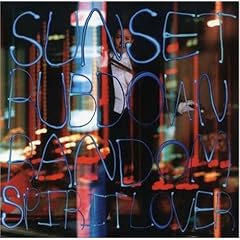
My first acquaintance with Sunset Rubdown came in the form of their previous album, Random Spirit Lover. I still remember sitting on a dark coach (sadly, the petrol-propelled rather than horse-drawn variety) gazing at the smeared lights of London through a window lashed by the rain, with wildly cascading scales and arpeggios ringing in my ears, and feeling myself suddenly encaptivated.

(It was only later that the congruence between that view through my window and the album's artwork struck me.)

Amongst other things, I loved the witty juxtapositions of sound, key and lyric. Most of all, I loved its joyous haphazardness, its infectious mania. It was definitely one of my favourite albums of 2007 (2007? Bloody hell, that's two years ago!) – and sparked an ongoing admiration for the band.

So you may well imagine that I have been eagerly anticipating Dragonslayer. And I stubbornly refuse to apologise for the fact that I shall doubtless be measuring it up, herebelow, against the yardstick of Random Spirit Lover.


Okay then, Heavy Soil – get out your yardstick

First song 'Silver Moons' establishes the pace in the same way that the excellent 'The Mending of the Gown' did for 'Random Spirit Lover'. But where 'The Mending...' was helter-skelter, bubbling over, madly inventive, scarcely contained, 'Silver Moons' is measured, atmospheric, grandiloquent. There's a heaviness here that's quite a departure from Random Spirit Lover's flightiness.

To me, the record approaches, at times, the sound of Wolf Parade (one of lead vocalist Spencer Krug's several other musical outfits).

And with the move away from flightiness, there's also a move in the direction of higher-fi. That's not to say that this is a glossily produced release – but the rawness of Random Spirit Lover (with its grittily massive kick drum sounds and oh-so-brittle guitars) is decidedly tamed, here – resulting, perhaps, in a more balanced mix ... but (to Heavy Soil's ears) one that's also less charming, more conventional.

The band recaptures the thrill of the earlier album fitfully. 'You Go On Ahead (Trumpet Trumpet II)' kicks satisfyingly into its outro, with the sense of surging into a home straight ... And there's still musical wit in here. The little guitar soloed snatch of 'We Wish You A Merry Christmas' in 'Silver Moons', the pass-the-parcel countermelodies of 'Apollo And The Buffalo And Anna Anna Anaa Oh!'...


So, yes, let's talk about more of the good stuff

'Idiot Heart' is a standout track – possibly the album's best (we've already written about the song in isolation, but – for your convenience, here's a link to Idiot Heart mp3). 'Black Swan' is also pretty kickin', with its eerily insistent taps, snaps and clicks, and sudden tempestuous gusts of sweeping melody. It's no coincidence, I suspect, that these are two of the record's most uptempo and dynamically varied songs.


The heavy sinuousness of closing track 'Dragon's Lair' (= Dragonslayer, if you say it aloud, see?) is handled well, and the song justifies its ten-and-a-half-minute length, as themes (both lyrical and melodic) are teased out and organically developed.

And there are still those ebullient surges into Casio toy keyboard tomfoolery – but they're somehow a bit more sensible, a bit less adventurous, a bit more subdued.


Subdued, you say?

Yes, subdued.

Everything about this record feels safer than Random Spirit Lover. And perhaps that means more people will like it [what do you mean, 'jadedly cynical'? This is a music blog, damn it: what did you expect?]. But Sunset Rubdown have taken a step away from the territory that made them so interesting to me.

That's not to say there's nothing new here. There's more extensive (and effective) use of Camilla Wynne Ingr's backing vocals, which often superbly offset Spencer Krug's reedy squawks. And there's perhaps more consideration given to the delicacies of arrangement and mix – a more transparent sound – which allows details to shine through.

But there's nothing here that surprises me.

And I like surprises.

(Surprise presents are particularly nice. Postal address provided on request.)


So what you're saying is ...?

What I'm saying is: this is quite a good album. If I hadn't been bewitched and betwitched by Random Spirit Lover and were coming at this afresh, it would certainly be strong enough to make me take notice. It's just that, relative to the slapdash brilliance of the band's earlier work, it's slightly disappointing.

Get this: not enormously disappointing. Just slightly.


The omnipresent disclaimer: the mp3s herefromlinked are provided to allow you better to gain an impression of Sunset Rubdown's work. If you like, 'em, please go and preorder the album (Amazon UK)

Friday, 29 May 2009

A Majestic Piece of Friday Splendidness by the Impressions


It's Friday, the sun is shining, and Heavy Soil is in a moderately jubilant frame of mind. In celebration of this fact, we present: sunnyfridaysong.


This comes to us courtesy of the recommendation of the wise Mr Craig (here he is on Twitter; here he writes about things cinematographic; and here is our opinion of his own superb musics), who is pretty hot on the jazzward side of the musical spectrum.

So … back to 'Gone Away'.

I love the opening, with its dark, reedy horns and shimmering tremolando strings – and the thoroughly unexpected harmonic shift as the intro steps up into verse 1. Altogether the arrangement is a majestic piece of splendidness, inspired glockenspiel figures, insistent syncopations, seamlessly interwoven countermelodies and all.

2.23's shift to major is ace, too, as we burst into the middle-8. Then, twenty seconds later, we're treated to an exhilaratingly vertiginous interlude of triple time. Brilliant.

Nice bass, too. And, of course, the vocals are superb – backing and lead.

(Incidentally, I realise that – lyrically – this isn't exactly sunnyfriday in spirit. But, hell, it's good, innit?)

Wednesday, 27 May 2009

Review: Further Complications by Jarvis Cocker

Great artwork, by the way


I absolutely understand why some people would find themselves utterly turned off by Jarvis Cocker. He is deeply, deeply self-conscious in a way that has the potential to be frustrating, especially if interpreted as clever-clever yet empty irony.

I, however, am an enthusiastic admirer. One of the first five or six albums I owned was Pulp's This Is Hardcore – an album I'd still rank amongst the most sublime of my record collection. And I really don't think he's ever been fey, arrogant or poseurish in his irony – qualities to which I would object.

On the newly released solo album Further Complications, in any case, he is probably the straightest he's been. Even when he's self-consciously punning, it's rather beautifully constructed, rather dignified in its rueful self-deprecation. Here's the opening of Leftovers:

I met her in the museum of paleontology
And I make no bones about it
I said if you wish to study dinosaurs,
I know a specimen whose interest is undoubted

Trapped in a body that is failing me
Well, please allow me to be succinct
I wanna love you whilst we both still have flesh upon our bones
Before we both become extinct

And, hell, Jarv delivers the lines like a pro. He's human, all too human.


Jarvis Cocker at – or near – his best

The best songs are 'Angela', which is a fucking brilliant single – definitely one of the year's best –and 'I Never Said I Was Deep', which is maturely angry, ambiguous and sad. And damn well instrumented, too. Have a listen to the whole song, why don't you? Download an mp3 of Jarvis Cocker's 'I Never Said I Was Deep'. I defy you not to get into this groove. Er, man.

Thanks to the engineering/production (whatever you want to call it) of the to-all-intents-and-purposes-deified-by-Heavy-Soil Steve Albini, this album is very different from Cocker's previous work (both in and out of Pulp). Immediate, urgent, three-dimensional. Production-wise, 'Fuckingsong' is a highlight, with its scrapes, raking-claw feedback and reversed guitar slices.

And when the momentum is up, this is terrifically compelling. Check out 'Angela' (if you'll excuse the expression), and you'll see what I mean. Like an artist working with a new medium, Cocker's songs take on a wholly new aspect under the uncompromising fingers of Albini. At times, this is Cocker at or near his best.


But?

I do feel, though, that the album does the same thing as did Pulp's swansong We Love Life and (to a lesser degree) Cocker's debut solo record, Jarvis: it loses its momentum and focus toward the end. Goes slightly to seed. Things get a little too long, slow and delay-soaked … And (more damagingly) start to sound very very much like other Pulp/Cocker songs – exactly the trap the majority of the earlier songs had not only avoided but disarmed and converted into dootzy mantlepiece ornaments.

Aside from this sonic wavering towards its end, I like this record's colours: off-blacks – slate and charcoal – dashed through with coppery strands. The nasal resonance of the horns tessalating seamlessly with the no-edge-smoothed signature Albini sound. Cocker's vocals have always tended (in a good way) toward the oily – and sit fantastically in this context. A hugely satisfactory contrast of textures: it's like eating scallops with crunchy-fried bacon.

Awesome, in other words.

If only there wasn't that shift down in musical gears – accompanied, crucially, by a shift down in musical originality – towards the end. It not only undoes the admirable work of the earlier songs; it also prevents me fully from grasping the album as a whole. And this is the problem with which I've been grappling since I first bought it. Because, on the strength of the first two-thirds, I'd rate this album very highly (though probably still shy of This Is Hardcore). But as a whole, I can't quite say.

Hey, how about you buy it yourself (iTunes, Amazon) and let me know what you think, eh?

Thursday, 7 May 2009

Musikhorizon 2: Sunset Rubdown jiggle and surge


Sunset Rubdown is an imaginative, witty, lemon-zesty-fresh kind of a band. If you read yesterday's post, you'll not need to be told that Heavy Soil slathers its rabid admiration over their excellent album Random Spirit Lover.

And, next month, they have a new album out, the intriguingly entitled 'Dragonslayer'.

So today's appetite-whetter is the single from said album. Download an mp3 of Idiot Heart by Sunset Rubdown.

I know what Allan of AWMusic means when he says that 'I usually don’t like Sunset Rubdown tracks as stand alone but rather in one cohesive unit'. It's fair to say that Sunset Rubdown is a big-concepts sort of band.

Nevertheless, this is a pretty promising song, spikily swooping, tight-yet-loose. There's a breathless, jiggly-legged insistence to its momentum, and the usual Sunset Rubdown lyrical oscillations between wrily youthful refrains and mythologically tinged fragmentation.

… And a wonderful surge into melody from 'If I was a horse', with nice sprinklings of female backing vocals. It has the thing that Heavy Soil likes in a song: organicism. The music develops and the arrangements billow and contract in a way that is neither rigid nor predictable.

So, yes. Dragonslayer is out on 23 June. Good good.

Wednesday, 6 May 2009

Review: Random Spirit Lover by Sunset Rubdown


Once again from the archives, this is another review that I originally wrote, something more than a year ago, I believe, for MOG but which that site's redesign has rendered painful to read. So I reproduce it here. It'll also link (in the seamless manner you've come to expect) to the next Musikhorizon song – due tomorrow.


Wit in music.

Not in lyrics, which is easy enough – but in the way one chord leads to another, or a melody appears, or pauses are used. It's a rare phenomenon: one found in the work of classical composers such as Handel and Joseph Haydn, say. A (rather more modern) witty album, in my opinion, is Weezer's Pinkerton (leagues better than anything else by the band) – and Sunset Rubdown’s Random Spirit Lover reminds me, in some ways, of that record.

To start off by comparing Sunset Rubdown to Weezer is (to put it mildly) potentially misleading. These two bands are not coming from the same place. But the ebullient, inventive playfulness – coupled with musical intelligence tempered with irreverence – is common.

And, despite the many differences between the bands, there is also a certain similarity in sound between Random Spirit Lover and Pinkerton (which, if you don't know it, is quite, quite different from Weezer’s more recent, heavily produced releases).

A brittle, unproduced, spindly quality.

Defining Sunset Rubdown's musical wit isn't necessarily easy. Much of the time, it's to do with juxtapositions and an almost slapdash approach to traditional musical devices. Keys change with abandon (just as they do, brilliantly, in Weezer's 'Across the Sea'), and, at times, the music puts me in mind of an excitable school music class, all of whom have unplugged their keyboards while practising (and messing around with) their scales and arpeggios.

Which, of course, would actually sound awful.

But here, it doesn't: Random Spirit Lover isn’t ever cacophanous. There’s even a certain strange, deliberate cheesiness to it all, with its retro synth sounds and scale-based melodies. Which, again, might sound derogatory – but is in fact laudatory.


Troubadour synth-pop

Before I allow the cement to dry around my Weezer comparison, I should note that Sunset Rubdown’s music is far more experimental and eclectic. On the latter quality, indeed, few artists or bands successfully combine aspects of everything from troubadour-esque, quasi-Medieval balladry, through Music Hall, to 80s synth-pop. This outstanding ability to bring together disparate musical elements sets the band alongside artists such as Joanna Newsom – different though their respective 'sounds' and influences may be. There's a baseline of irreverence and deliberate messiness, backed up by strong musicianship, that is reminiscent of The Dresden Dolls – and a marriage between traditional rock instrumentation and the unashamedly synthetic that makes the band sound, at times, ever so slightly like Grandaddy (albeit Grandaddy on speed).


Hugely energetic, idiosyncratic, inventive – it's one of the best opening tracks I've heard. As throughout the album, melodic instruments (guitar or synth leads) feature prominently. Set-piece solos are rare, with these intricate, rather fragile melodic lines instead being woven into the texture of the whole song, often cleverly offsetting the vocals. Lead instruments, then, are integral, not gratuitous.


Lo-fi-electro-intellipunk jig

Elsewhere, there is further proof of adventurous eclecticism: 'Up on Your Leopard, Upon the End of Your Feral Days' might be best described as a lo-fi-electro-intellipunk jig, with its vaguely courtly feel even (appropriately, given the lyrical content). 'For the Pier (and dead shimmering)', meanwhile, is a kind of jerky, arpeggiator-laced take on Rogers & Hammerstein ('When You Walk Through a Storm').

'The Courtesan Has Sung' pairs sparsely-set vocal imitation (a kind of 'round') with martial rhythms – and then, when the rest of the instruments enter halfway through, there is a fantastic effect of sudden 'grounding' – new and unexpected life is added to the melodies.

An entirely different vocal texture – male and female vocals, doubled an octave apart and blended into a curiously androgynous hybrid – is explored in 'Colt Stands Up, Grows Horns'. (The band Mew does something similar, at times.) Then, the song blossoms into a dark, retro delayed-synth interlude—vaguely prog-rockish, but with far better chord changes. The result is brilliantly atmospheric, like instrumental music to a lo-fi indie science fiction movie.

Lyrics are often abstract, literary and somewhat opaque. But, when they need to be, they are clear, powerful – and brilliant:

But the pattern of flight is chaotic and blind
but it's right
Because chaos is yours and it's mine;
And chaos is luck, and like love, and love blind.

And – just to show that the band's wit isn't limited to the music alone – note the self-referential touch of the device called Verfremdungseffekt (or, more prosaically, according to wikipedia, 'alienation effect') – so beloved of absurdist theatre:

And explosions make debris
and catching it kind of suits you
well it doesn't suit me
She said, "My sails are flapping in the wind."
I said, "Can I use that in a song?"
She said, "I mean the end begins."
I said, "I know. Can I use that too?"

Listening to Random Spirit Lover, it is sometimes easy, in fact, to forget that these are songs – so well-considered and cleverly paced is the album. Tracks merge into one-another so that, often, inter-song transitions are barely noticeable – despite drawing on such disparate influences and sources, and vary so considerably in almost any musical sense. Impressively, dramatic and attention-holding variations in tempo, rhythm, key and arrangement are nevertheless bound seamlessly into a balanced, unified whole.

Seldom, I think, have I come across an album that successfully – entirely convincingly – covers so much musical ground, yet loses none of its focus and integrity. Excellent, and – I predict – enduringly interesting and rewarding.

Thursday, 23 April 2009

Review: Foamy Lather by Ultralash


I wrote the words below whilst on the reviewing team at MOG. But it was recently brought to my attention that my review, as it appears on MOG following that site's redesign, is now practically unreadable.

So here's a neatened up version.

There's not enough written about the band in question – Ultralash – on the web. So I figured that what there is should be easily accessible. For this is a fine band.

So: the review.


Imagine a lo-fi, countrified, battery-operated Portishead.

Right? Easy. Now, add a dusting of insouciant Damon Albarn (bear with me), the alt-rock nursery-rhyme quality of Eels, and, finally, a seasoning of late 80s/early 90s synth-pop.

Got that?

Possibly not. But I've made one point, at least: Ultralash is quite an unusual-sounding outfit.


Lads' mag alt-folk?

It's an odd name, for starters. Ultralash! Here in the UK, at least (I know not how universal the slang phrase "on the lash" may be), it could pass for the title of a lads' mag, or an 'edgy' Channel 4 documentary focusing on underage drinking and club culture.

I have to say that the sound of this record is nothing like my idea of a band called Ultralash. Which is not – I might add – necessarily a bad thing.

This is an experimental album – not trendy, not a la mode. Its roots are in American folk – but this record is 'folk' in its broadest, least generic sense. The slightly ramshackle, rough-edged juxtapositions of electronic and acoustic elements – trundling samples against fingerpicked guitar – is suggestive of the alt-country genre. I hear echoes of Grandaddy's fascination with organicised technology (although Ultralash is sparser, far less lush and accessible) and, more distinctly, of Sparklehorse – particularly the use of distorted, choppy mechanical loops, and the practice of interspersing short, sample-based interlude tracks amongst the album's longer songs.


Avoiding the cliches

For a record with its heart in folk/country, Foamy Lather avoids just about every potential cliche of those genres. Often, vocals take a subordinate role in these songs: sketchy, distant in the mix, effects-laden and detached. At times, reminiscent of PJ Harvey's excellent White Chalk.

Unlike White Chalk, though, this is a beat-suffused album. The dirty, roomy kit sound of opener 'Like a Daisy' is meaty and confidently simple: alongside the distorted, off-key bass, it's the backbone of the track, rather than a nuanced accompaniment. Rhythms, samples and loops frequently and emphatically take centre-stage.

Indeed, it's not until the fourth track – the rather lovely 'Dayglow' – that we hear Karry Walker's vocals mixed clean and upfront. It's an affecting, versatile voice, and the performance eloquently captures the weary quality of the song. I'm glad she made us wait three tracks for it.


Noncommittal Modernism - slaloming from melancholia to noise

Foamy Lather's songs are often explorations of single ideas and motifs, rather than complex, crafted entities. Development tends to be in arrangement and performance rather than built into the songs' structures. The impression is of a fragmentary work – slaloming from acoustic melancholia to collages of mechanical noise.

There's something Modernist about it all - rather TS Eliot ("a heap of broken images") – and the listener is quite deliberately (it seems to me) left to make sense of the bizarre juxtapositions and extreme, sudden shifts in tone and colour.

All of which, of course, makes it a difficult record about which to make general observations. I might call it sparse in nature – but then I think of the burst of lushness (strings, vocal harmonies, dirty drums) towards the end of 'Girl On Girl'. Listening to the pitch-bent, woozy near-bitonality of 'Whiskey Sour', I might call it obscure and capricious ... Or apathetic, wry and remote, with the Blur-like, "can't be bothered" vocal inflections of 'Turn Me On'. And then I stumble upon a gem of heartfelt sincerity – the nostalgia-tinted, melancholic 'Bury Me' – that knocks my carefully-assembled adjectives into disarray.

It's enigmatic, then – and eclectic. And challenging. In the best way.

Provocative.


Sugary platitudes + chauvinism

Which brings me to the song I've chosen to feature. Download an mp3 of 'World Of Suck' by Ultralash.

Bearing in mind my words above, it may need not be said that there's no representative track on this album – no neat encapsulation of the Ultralash sound. But I think 'World Of Suck' illustrates what I (perhaps pretentiously) think of as the band's noncommittal modernism.

Again, carried by a weighty beat (heavily distorted – bit-crushed – kit), it's a poker-faced 'Nothing Compares 2 U' (Sinnead O'Connor's version) for the 00s – its lyrics juxtaposing sugary romantic platitudes with intense chauvinism:

You're cute
Nice rack
Not fat
What's that?
You're fine
I can really talk to you.

It's a brilliantly unsettling song: by turns comical and dark, impenetrably delivered. Again, I'm reminded of PJ Harvey – in spirit and fearlessness more than in sound. Investigate: visit the Ultralash website.

Related articles