Showing posts with label key changes. Show all posts

Wednesday, 6 May 2009

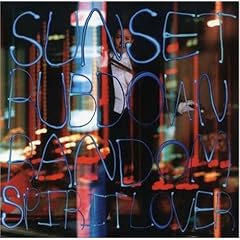
Review: Random Spirit Lover by Sunset Rubdown


Once again from the archives, this is another review that I originally wrote, something more than a year ago, I believe, for MOG but which that site's redesign has rendered painful to read. So I reproduce it here. It'll also link (in the seamless manner you've come to expect) to the next Musikhorizon song – due tomorrow.


Wit in music.

Not in lyrics, which is easy enough – but in the way one chord leads to another, or a melody appears, or pauses are used. It's a rare phenomenon: one found in the work of classical composers such as Handel and Joseph Haydn, say. A (rather more modern) witty album, in my opinion, is Weezer's Pinkerton (leagues better than anything else by the band) – and Sunset Rubdown’s Random Spirit Lover reminds me, in some ways, of that record.

To start off by comparing Sunset Rubdown to Weezer is (to put it mildly) potentially misleading. These two bands are not coming from the same place. But the ebullient, inventive playfulness – coupled with musical intelligence tempered with irreverence – is common.

And, despite the many differences between the bands, there is also a certain similarity in sound between Random Spirit Lover and Pinkerton (which, if you don't know it, is quite, quite different from Weezer’s more recent, heavily produced releases).

A brittle, unproduced, spindly quality.

Defining Sunset Rubdown's musical wit isn't necessarily easy. Much of the time, it's to do with juxtapositions and an almost slapdash approach to traditional musical devices. Keys change with abandon (just as they do, brilliantly, in Weezer's 'Across the Sea'), and, at times, the music puts me in mind of an excitable school music class, all of whom have unplugged their keyboards while practising (and messing around with) their scales and arpeggios.

Which, of course, would actually sound awful.

But here, it doesn't: Random Spirit Lover isn’t ever cacophanous. There’s even a certain strange, deliberate cheesiness to it all, with its retro synth sounds and scale-based melodies. Which, again, might sound derogatory – but is in fact laudatory.


Troubadour synth-pop

Before I allow the cement to dry around my Weezer comparison, I should note that Sunset Rubdown’s music is far more experimental and eclectic. On the latter quality, indeed, few artists or bands successfully combine aspects of everything from troubadour-esque, quasi-Medieval balladry, through Music Hall, to 80s synth-pop. This outstanding ability to bring together disparate musical elements sets the band alongside artists such as Joanna Newsom – different though their respective 'sounds' and influences may be. There's a baseline of irreverence and deliberate messiness, backed up by strong musicianship, that is reminiscent of The Dresden Dolls – and a marriage between traditional rock instrumentation and the unashamedly synthetic that makes the band sound, at times, ever so slightly like Grandaddy (albeit Grandaddy on speed).


Hugely energetic, idiosyncratic, inventive – it's one of the best opening tracks I've heard. As throughout the album, melodic instruments (guitar or synth leads) feature prominently. Set-piece solos are rare, with these intricate, rather fragile melodic lines instead being woven into the texture of the whole song, often cleverly offsetting the vocals. Lead instruments, then, are integral, not gratuitous.


Lo-fi-electro-intellipunk jig

Elsewhere, there is further proof of adventurous eclecticism: 'Up on Your Leopard, Upon the End of Your Feral Days' might be best described as a lo-fi-electro-intellipunk jig, with its vaguely courtly feel even (appropriately, given the lyrical content). 'For the Pier (and dead shimmering)', meanwhile, is a kind of jerky, arpeggiator-laced take on Rogers & Hammerstein ('When You Walk Through a Storm').

'The Courtesan Has Sung' pairs sparsely-set vocal imitation (a kind of 'round') with martial rhythms – and then, when the rest of the instruments enter halfway through, there is a fantastic effect of sudden 'grounding' – new and unexpected life is added to the melodies.

An entirely different vocal texture – male and female vocals, doubled an octave apart and blended into a curiously androgynous hybrid – is explored in 'Colt Stands Up, Grows Horns'. (The band Mew does something similar, at times.) Then, the song blossoms into a dark, retro delayed-synth interlude—vaguely prog-rockish, but with far better chord changes. The result is brilliantly atmospheric, like instrumental music to a lo-fi indie science fiction movie.

Lyrics are often abstract, literary and somewhat opaque. But, when they need to be, they are clear, powerful – and brilliant:

But the pattern of flight is chaotic and blind
but it's right
Because chaos is yours and it's mine;
And chaos is luck, and like love, and love blind.

And – just to show that the band's wit isn't limited to the music alone – note the self-referential touch of the device called Verfremdungseffekt (or, more prosaically, according to wikipedia, 'alienation effect') – so beloved of absurdist theatre:

And explosions make debris
and catching it kind of suits you
well it doesn't suit me
She said, "My sails are flapping in the wind."
I said, "Can I use that in a song?"
She said, "I mean the end begins."
I said, "I know. Can I use that too?"

Listening to Random Spirit Lover, it is sometimes easy, in fact, to forget that these are songs – so well-considered and cleverly paced is the album. Tracks merge into one-another so that, often, inter-song transitions are barely noticeable – despite drawing on such disparate influences and sources, and vary so considerably in almost any musical sense. Impressively, dramatic and attention-holding variations in tempo, rhythm, key and arrangement are nevertheless bound seamlessly into a balanced, unified whole.

Seldom, I think, have I come across an album that successfully – entirely convincingly – covers so much musical ground, yet loses none of its focus and integrity. Excellent, and – I predict – enduringly interesting and rewarding.

Wednesday, 15 April 2009

He is a rock. And he has a new album out.


I like Bill Callahan (he of Smog fame) very much indeed. Ever since seeing him play in Belfast, Heavy Soil has been a confirmed admirer of his low-key, modest sincerity.

His new album, Sometimes I Wish We Were an Eagle, was released yesterday, and is currently making its way down the tubes and ventilation shafts of the mighty www onto my iTunes. Rest assured, o soiler: it shall receive its review in due course.

Meanwhile, as an amuse bouche, if you will, I leave you with this video for 'Rock Bottom Riser', from his A River Is Not Too Much To Love album. If you remain unacquainted with the delights of Callahan, I urge you to give it a whirl.

Bask in the unhurried delivery, the mature and matter-of-fact way in which his voice navigates some lovely harmonic/melodic waters. Many an artist, had they come up with this chorus, would've milked dry the 'owe it all to you' passage, for instance. But Callahan has the restraint to let the melody sing itself.

... and what a delicious, warming change to major at 1.45. Enjoy.

Thursday, 19 March 2009

Review: Beware by Bonnie 'Prince' Billy


The Obligatory, Obliquely Self-Revelatory Anecdote Part

When I was a nipper, I used to have singing lessons.

And I was a fortunate nipper – to have been taught, successively, by two very pleasant singing teachers.

The latter of these – the magnificent Nicholas Perfect (magnificent, hear ye, not merely in name) – once posed an insightful rhetorical question that has stayed with me: 'But don't you think it's so much easier to write an interesting sad song than an interesting happy one?'

Remember that nugget of Perfect wisdom. It'll come up again later.


The Long-Have-Been-My-Struggles, Difficult-And-Painful-Is-My-Task Part

It's not particularly easy to review an artist such as Bonnie 'Prince' Billy (hereafter, 'BPB'). The last time I did so, I grappled with Ask Forgiveness – itself a tricksy wee album – and now I grapple with the newly-released Beware.

Perhaps you've read a review or two already. Who knows? You might be into that kind of thing. If so, you'll perhaps have observed that early reactions have been subdued. Drowned in Sound's Alexander Tudor isn't keen, for instance, damning the album with a slightly-worse-than-mediocre 4/10.

Straight off, I'm going to ask you to forget that (slightly smugly iconoclastic?) rating. No way is this album worth a paltry 4/10.

Indeed – [Here, Heavy Soil pauses for its own interlude of smug self-reflexion] – this is why Heavy Soil avoids any kind of rating system. Because it's all too easy for a reviewer's score to be warped beyond recognition by the forces of his or her expectation. A rating system works, perhaps, for new or unknown artists, simply as a filter. But applied to a superb, versatile and seasoned musician such as Will Oldham (the human behind Bonnie 'Prince' Billy), a rating is something of a joke. We need to be nuanced, here.

Beware is not I see a Darkness; not The Letting Go. It is considerably less dark (at least on the surface) than much of Oldham's work; more whimsical. It is also more lavish and expansive in its production. In these two respects, it moves away from what might be considered BPB heartlands – from the territory in which many of his fans may have cemented their raptness.

So let's beware [a ha!] of measuring Beware against a scale extrapolated from BPB's earlier work. For the moment, at least. Let's consider it on its own merits.


The Actually Talking About The Songs Part

Opener 'Beware your only friend' strikes out with an exuberance that characterises many of these songs – and (again, typically) the sense of ensemble and musicianship is strong. The whole record is peppered with jubilant instrumentals (provided, of course, by BPB's intimidatingly distinguished and extensive array of collaborators) – and these are carefully, neatly, sensitively combined, thanks to fine, transparent production (the kind that's good enough seldom to be noticeable).

So on 'You Don't Love Me', raucous fiddles swoop and peck, saw and squall; mandolins shimmer and accordians flutter on 'I Don't Belong To Anyone'. Meanwhile, 'Heart's Arms' opens with a wash of vibratoless fiddles and deep, buzzing, woodily resonant bass – but masterfully swells to a resounding series of fuller-textured climaxes, before ebbing away back to its original sparseness.

A good many of these songs, I might add, have rather splendid middle-8s/C-sections. 'You Can't Hurt Me Now', for instance, suddenly breaks from its leisurely, countrified swing into an affectingly direct injunction to 'Do it now and not let someday / Get in the way'. In my characteristic, achingly pretentious manner, I couldn't help but be reminded of Lambert Strether in Henry James' brilliant (but long) novel The Ambassadors:

'Live all you can – it's a mistake not to. It doesn't so much matter what you do in particular, so long as you have your life. If you haven't had that, what have you had?'

Like Strether's impassioned outburst in the novel, its directness is striking in the light of what has gone before it – in James' novel, the mannered, restrained conversation of high society; in Oldham's song, the settled, predictable, conventional country swing.

Indeed, I suppose this is actually a symptom of one of the record's most pronounced qualities: its organicism. Whether its in terms of their structure (BPB commonly eschews or adapts familiar verse-chorus-verse-chorus sequences), or the fluctuation of their instrumentation, these songs feel natural. They feel like a conversation between friends – led not by the conventions of polite discourse, but by the desire to communicate.

This means that they develop in unpredictable yet uncontrived ways.

Often, you'll be swept away by a flurry of unexpected key-shifts, or drawn in by a sudden dynamic change. Thus, whilst the form of many of these songs is more accessible than BPB's bleaker and more experimental earlier work, it does not follow that they are simpler.

Want to hear what I'm blathering about?


Dig, first of all, that woozy, fluking fiddle line, and the way it subsides into the vocal entry. Then feel how the change begins at 0.57 with the unexpected, colourful move to minor (accompanied by the addition of the organ) ... is temporarily relaxed by the resolution at 1.10 ... before kicking into a beautiful change of key at 1.23, full of sunbathed backing vocals and flutes.

This is songwriting with the harmonic deftness and nuance of the Beatles at their best. Notice how superbly judged are the swells of dynamic and instrumentation – how the music gathers pace, density and urgency to keep pace with the motion of the chords – so just as the song is moving into new grounds of harmony and key, so the instrumentation and tempo are subtly augmented to further the impression of movement.


The Part Where He Seamlessly And Not Even Remotely Predictably Brings It All Back To The Anecdote From The Opening Part

So this is where Mr Perfect's words re-echo in our ears. Crack on some reverb, so he sounds like Obi Wan Kanobi talking to Luke Skywalker, if you like:

'Don't you think it's so much easier to write an interesting sad song than an interesting happy one?'

I think you're right, Mr Perfect. And I think – for all its apparent breeziness and countrified charm – this is a pretty damn intelligent album; a pretty damn sensitive album; a pretty damn worthwhile album. And it would be a grievous mistake to follow the likes of Drowned in Sound in equating light with lite.

(Heck, these days, it'd probably just be a mistake to follow Drowned in Sound, full stop. But I'll never learn.)

All that said, however, I will – as promised – return to the subject of Beware in the context of BPB's earlier work. And I will say this: personally, I do not find it quite as engaging as 'I See A Darkness' &c. Personally.

Somehow, these songs do not address me quite so directly, emblazon themselves quite so starkly upon my mind as I listen. There is that small degree of distance. A slight sensation of mutedness.

Less powerful, perhaps.

But I'd be very, very wary of saying less good.


The mp3 provided is there in order that you may gain a flavour of BPB's loveliness. If you like, do please buy a copy of the whole album. Here's an Amazon link, free of charge.


Tuesday, 25 November 2008

Andrew Lloyd Weezer


Weezer's Pinkerton is a brilliant album. Some people debate its preeminence, focusing their adulation instead upon the band's debut 'blue' album.

To them I say, 'I respectfully yet emphatically disagree with your point of view.'

Heck yes.

Falling For You (download mp3 via YouSendIt) is all about the guitar solo from 2.10, and the accompanying extra-matured-cheddar-cheesy sequence of key-changes, which could almost come from an Andrew Lloyd Webber musical.

IN A GOOD WAY.

... All culminating in a lovely interrupted cadence (/key change) at 2.35 (translation: you were expecting triumphant and happy; it goes sad and wistful). The beauty is that these are such hackneyed musical motifs and devices. It's almost banal. But – crucially – not even slightly so in this context.

It mentions cellos, too, thereby notching up several bonus points.

Weren't Weezer so much better before they went compression-mad? Why the hell doesn't Rivers Cuomo write songs like this any more? Songs that teeter majestically on the upturned drawing-pin balanced on the hairline division between irony and intense self-revelation.


Related articles