Showing posts with label textures. Show all posts

Tuesday, 2 June 2009

Review: Dragonslayer by Sunset Rubdown


So – later this month, Sunset Rubdown release their new record, Dragonslayer.

My first acquaintance with Sunset Rubdown came in the form of their previous album, Random Spirit Lover. I still remember sitting on a dark coach (sadly, the petrol-propelled rather than horse-drawn variety) gazing at the smeared lights of London through a window lashed by the rain, with wildly cascading scales and arpeggios ringing in my ears, and feeling myself suddenly encaptivated.

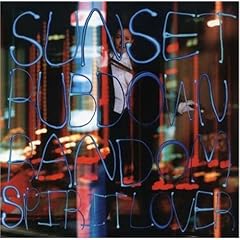
(It was only later that the congruence between that view through my window and the album's artwork struck me.)

Amongst other things, I loved the witty juxtapositions of sound, key and lyric. Most of all, I loved its joyous haphazardness, its infectious mania. It was definitely one of my favourite albums of 2007 (2007? Bloody hell, that's two years ago!) – and sparked an ongoing admiration for the band.

So you may well imagine that I have been eagerly anticipating Dragonslayer. And I stubbornly refuse to apologise for the fact that I shall doubtless be measuring it up, herebelow, against the yardstick of Random Spirit Lover.


Okay then, Heavy Soil – get out your yardstick

First song 'Silver Moons' establishes the pace in the same way that the excellent 'The Mending of the Gown' did for 'Random Spirit Lover'. But where 'The Mending...' was helter-skelter, bubbling over, madly inventive, scarcely contained, 'Silver Moons' is measured, atmospheric, grandiloquent. There's a heaviness here that's quite a departure from Random Spirit Lover's flightiness.

To me, the record approaches, at times, the sound of Wolf Parade (one of lead vocalist Spencer Krug's several other musical outfits).

And with the move away from flightiness, there's also a move in the direction of higher-fi. That's not to say that this is a glossily produced release – but the rawness of Random Spirit Lover (with its grittily massive kick drum sounds and oh-so-brittle guitars) is decidedly tamed, here – resulting, perhaps, in a more balanced mix ... but (to Heavy Soil's ears) one that's also less charming, more conventional.

The band recaptures the thrill of the earlier album fitfully. 'You Go On Ahead (Trumpet Trumpet II)' kicks satisfyingly into its outro, with the sense of surging into a home straight ... And there's still musical wit in here. The little guitar soloed snatch of 'We Wish You A Merry Christmas' in 'Silver Moons', the pass-the-parcel countermelodies of 'Apollo And The Buffalo And Anna Anna Anaa Oh!'...


So, yes, let's talk about more of the good stuff

'Idiot Heart' is a standout track – possibly the album's best (we've already written about the song in isolation, but – for your convenience, here's a link to Idiot Heart mp3). 'Black Swan' is also pretty kickin', with its eerily insistent taps, snaps and clicks, and sudden tempestuous gusts of sweeping melody. It's no coincidence, I suspect, that these are two of the record's most uptempo and dynamically varied songs.


The heavy sinuousness of closing track 'Dragon's Lair' (= Dragonslayer, if you say it aloud, see?) is handled well, and the song justifies its ten-and-a-half-minute length, as themes (both lyrical and melodic) are teased out and organically developed.

And there are still those ebullient surges into Casio toy keyboard tomfoolery – but they're somehow a bit more sensible, a bit less adventurous, a bit more subdued.


Subdued, you say?

Yes, subdued.

Everything about this record feels safer than Random Spirit Lover. And perhaps that means more people will like it [what do you mean, 'jadedly cynical'? This is a music blog, damn it: what did you expect?]. But Sunset Rubdown have taken a step away from the territory that made them so interesting to me.

That's not to say there's nothing new here. There's more extensive (and effective) use of Camilla Wynne Ingr's backing vocals, which often superbly offset Spencer Krug's reedy squawks. And there's perhaps more consideration given to the delicacies of arrangement and mix – a more transparent sound – which allows details to shine through.

But there's nothing here that surprises me.

And I like surprises.

(Surprise presents are particularly nice. Postal address provided on request.)


So what you're saying is ...?

What I'm saying is: this is quite a good album. If I hadn't been bewitched and betwitched by Random Spirit Lover and were coming at this afresh, it would certainly be strong enough to make me take notice. It's just that, relative to the slapdash brilliance of the band's earlier work, it's slightly disappointing.

Get this: not enormously disappointing. Just slightly.


The omnipresent disclaimer: the mp3s herefromlinked are provided to allow you better to gain an impression of Sunset Rubdown's work. If you like, 'em, please go and preorder the album (Amazon UK)

Wednesday, 27 May 2009

Review: Further Complications by Jarvis Cocker

Great artwork, by the way


I absolutely understand why some people would find themselves utterly turned off by Jarvis Cocker. He is deeply, deeply self-conscious in a way that has the potential to be frustrating, especially if interpreted as clever-clever yet empty irony.

I, however, am an enthusiastic admirer. One of the first five or six albums I owned was Pulp's This Is Hardcore – an album I'd still rank amongst the most sublime of my record collection. And I really don't think he's ever been fey, arrogant or poseurish in his irony – qualities to which I would object.

On the newly released solo album Further Complications, in any case, he is probably the straightest he's been. Even when he's self-consciously punning, it's rather beautifully constructed, rather dignified in its rueful self-deprecation. Here's the opening of Leftovers:

I met her in the museum of paleontology
And I make no bones about it
I said if you wish to study dinosaurs,
I know a specimen whose interest is undoubted

Trapped in a body that is failing me
Well, please allow me to be succinct
I wanna love you whilst we both still have flesh upon our bones
Before we both become extinct

And, hell, Jarv delivers the lines like a pro. He's human, all too human.


Jarvis Cocker at – or near – his best

The best songs are 'Angela', which is a fucking brilliant single – definitely one of the year's best –and 'I Never Said I Was Deep', which is maturely angry, ambiguous and sad. And damn well instrumented, too. Have a listen to the whole song, why don't you? Download an mp3 of Jarvis Cocker's 'I Never Said I Was Deep'. I defy you not to get into this groove. Er, man.

Thanks to the engineering/production (whatever you want to call it) of the to-all-intents-and-purposes-deified-by-Heavy-Soil Steve Albini, this album is very different from Cocker's previous work (both in and out of Pulp). Immediate, urgent, three-dimensional. Production-wise, 'Fuckingsong' is a highlight, with its scrapes, raking-claw feedback and reversed guitar slices.

And when the momentum is up, this is terrifically compelling. Check out 'Angela' (if you'll excuse the expression), and you'll see what I mean. Like an artist working with a new medium, Cocker's songs take on a wholly new aspect under the uncompromising fingers of Albini. At times, this is Cocker at or near his best.


But?

I do feel, though, that the album does the same thing as did Pulp's swansong We Love Life and (to a lesser degree) Cocker's debut solo record, Jarvis: it loses its momentum and focus toward the end. Goes slightly to seed. Things get a little too long, slow and delay-soaked … And (more damagingly) start to sound very very much like other Pulp/Cocker songs – exactly the trap the majority of the earlier songs had not only avoided but disarmed and converted into dootzy mantlepiece ornaments.

Aside from this sonic wavering towards its end, I like this record's colours: off-blacks – slate and charcoal – dashed through with coppery strands. The nasal resonance of the horns tessalating seamlessly with the no-edge-smoothed signature Albini sound. Cocker's vocals have always tended (in a good way) toward the oily – and sit fantastically in this context. A hugely satisfactory contrast of textures: it's like eating scallops with crunchy-fried bacon.

Awesome, in other words.

If only there wasn't that shift down in musical gears – accompanied, crucially, by a shift down in musical originality – towards the end. It not only undoes the admirable work of the earlier songs; it also prevents me fully from grasping the album as a whole. And this is the problem with which I've been grappling since I first bought it. Because, on the strength of the first two-thirds, I'd rate this album very highly (though probably still shy of This Is Hardcore). But as a whole, I can't quite say.

Hey, how about you buy it yourself (iTunes, Amazon) and let me know what you think, eh?

Wednesday, 6 May 2009

Review: Random Spirit Lover by Sunset Rubdown


Once again from the archives, this is another review that I originally wrote, something more than a year ago, I believe, for MOG but which that site's redesign has rendered painful to read. So I reproduce it here. It'll also link (in the seamless manner you've come to expect) to the next Musikhorizon song – due tomorrow.


Wit in music.

Not in lyrics, which is easy enough – but in the way one chord leads to another, or a melody appears, or pauses are used. It's a rare phenomenon: one found in the work of classical composers such as Handel and Joseph Haydn, say. A (rather more modern) witty album, in my opinion, is Weezer's Pinkerton (leagues better than anything else by the band) – and Sunset Rubdown’s Random Spirit Lover reminds me, in some ways, of that record.

To start off by comparing Sunset Rubdown to Weezer is (to put it mildly) potentially misleading. These two bands are not coming from the same place. But the ebullient, inventive playfulness – coupled with musical intelligence tempered with irreverence – is common.

And, despite the many differences between the bands, there is also a certain similarity in sound between Random Spirit Lover and Pinkerton (which, if you don't know it, is quite, quite different from Weezer’s more recent, heavily produced releases).

A brittle, unproduced, spindly quality.

Defining Sunset Rubdown's musical wit isn't necessarily easy. Much of the time, it's to do with juxtapositions and an almost slapdash approach to traditional musical devices. Keys change with abandon (just as they do, brilliantly, in Weezer's 'Across the Sea'), and, at times, the music puts me in mind of an excitable school music class, all of whom have unplugged their keyboards while practising (and messing around with) their scales and arpeggios.

Which, of course, would actually sound awful.

But here, it doesn't: Random Spirit Lover isn’t ever cacophanous. There’s even a certain strange, deliberate cheesiness to it all, with its retro synth sounds and scale-based melodies. Which, again, might sound derogatory – but is in fact laudatory.


Troubadour synth-pop

Before I allow the cement to dry around my Weezer comparison, I should note that Sunset Rubdown’s music is far more experimental and eclectic. On the latter quality, indeed, few artists or bands successfully combine aspects of everything from troubadour-esque, quasi-Medieval balladry, through Music Hall, to 80s synth-pop. This outstanding ability to bring together disparate musical elements sets the band alongside artists such as Joanna Newsom – different though their respective 'sounds' and influences may be. There's a baseline of irreverence and deliberate messiness, backed up by strong musicianship, that is reminiscent of The Dresden Dolls – and a marriage between traditional rock instrumentation and the unashamedly synthetic that makes the band sound, at times, ever so slightly like Grandaddy (albeit Grandaddy on speed).


Hugely energetic, idiosyncratic, inventive – it's one of the best opening tracks I've heard. As throughout the album, melodic instruments (guitar or synth leads) feature prominently. Set-piece solos are rare, with these intricate, rather fragile melodic lines instead being woven into the texture of the whole song, often cleverly offsetting the vocals. Lead instruments, then, are integral, not gratuitous.


Lo-fi-electro-intellipunk jig

Elsewhere, there is further proof of adventurous eclecticism: 'Up on Your Leopard, Upon the End of Your Feral Days' might be best described as a lo-fi-electro-intellipunk jig, with its vaguely courtly feel even (appropriately, given the lyrical content). 'For the Pier (and dead shimmering)', meanwhile, is a kind of jerky, arpeggiator-laced take on Rogers & Hammerstein ('When You Walk Through a Storm').

'The Courtesan Has Sung' pairs sparsely-set vocal imitation (a kind of 'round') with martial rhythms – and then, when the rest of the instruments enter halfway through, there is a fantastic effect of sudden 'grounding' – new and unexpected life is added to the melodies.

An entirely different vocal texture – male and female vocals, doubled an octave apart and blended into a curiously androgynous hybrid – is explored in 'Colt Stands Up, Grows Horns'. (The band Mew does something similar, at times.) Then, the song blossoms into a dark, retro delayed-synth interlude—vaguely prog-rockish, but with far better chord changes. The result is brilliantly atmospheric, like instrumental music to a lo-fi indie science fiction movie.

Lyrics are often abstract, literary and somewhat opaque. But, when they need to be, they are clear, powerful – and brilliant:

But the pattern of flight is chaotic and blind
but it's right
Because chaos is yours and it's mine;
And chaos is luck, and like love, and love blind.

And – just to show that the band's wit isn't limited to the music alone – note the self-referential touch of the device called Verfremdungseffekt (or, more prosaically, according to wikipedia, 'alienation effect') – so beloved of absurdist theatre:

And explosions make debris
and catching it kind of suits you
well it doesn't suit me
She said, "My sails are flapping in the wind."
I said, "Can I use that in a song?"
She said, "I mean the end begins."
I said, "I know. Can I use that too?"

Listening to Random Spirit Lover, it is sometimes easy, in fact, to forget that these are songs – so well-considered and cleverly paced is the album. Tracks merge into one-another so that, often, inter-song transitions are barely noticeable – despite drawing on such disparate influences and sources, and vary so considerably in almost any musical sense. Impressively, dramatic and attention-holding variations in tempo, rhythm, key and arrangement are nevertheless bound seamlessly into a balanced, unified whole.

Seldom, I think, have I come across an album that successfully – entirely convincingly – covers so much musical ground, yet loses none of its focus and integrity. Excellent, and – I predict – enduringly interesting and rewarding.

Thursday, 2 April 2009

Review: A Woman A Man Walked By, by PJ Harvey and John Parish


So, you've seen the video for 'Black Hearted Love'? Good, innit?

But what about the album?

It's called A Woman, A Man, Walked By, and it was released on Monday. PJH's site altruistically offers a list of emporia in which you can snaffle it up.


Something New, Or More Of The Same?

PJH is all about reinvention. Few artists (and extraordinarily few with a comparably high profile) have explored so rich an array of voices and identities over the course of their career. How much of a change is A Woman, A Man, Walked By, relative to what's gone before?

Like White Chalk, there is a fascination with textures (meaning the combination of instruments and sounds at any one time) and timbres (meaning the tones and sonic characteristics of each individual instrument or sound). And also like White Chalk, there's a lot of percussion going on, but hardly ever courtesy of a drum kit. PJH and John Parish seem to favour not only acoustic, minimalist percussion (tambourines, hand drums and the like), but also percussive instrumentation and production.

So guitars are real rhythm instruments – woody and brittle or diced, metallic, rattlingly hacked ... And they're equalised in such a way as to accentuate the attack of each strum or pick – so that the songs drive without having their detail obscured by tub-thumping.

Guitars figure centrally, then. Nevertheless they're not perhaps as prominent or as open-throttled as the single 'Black Hearted Love' might've led us to expect. There's not as much uncomplicated rocking out as I'd expected having heard the single, with its expansive riffing and bluesy crunch – but there's lots of sonic inventiveness.


Not that I want y'all to think that this is a delicate, subtle record.

It's not. Fourth track 'Chair', for instance, is unsettlingly rootless, trip-hop-laced, oscillating between squally, punctuative rock onslaughts and eerily warbling pipe-organ-like sounds ... With its sudden, vertiginous transitions, the overall effect is something akin to Radiohead's 'Trans-Atlantic Drawl' [youtube] – a song (incidentally) that's criminally neglected thanks to its obscure B-side status, but actually one of the best – most interesting – things they've written.

(Radiohead's has way more key changes, though ...)

[Hey – why don't you just download PJ Harvey's 'Chair' as an mp3 and see what you make of it?]

Vocally – as ever – PJH is ventriloquistic. In 'April', she takes on the voice of a wheezy old soul singer – which, in combination with the rotary organ accompaniment, gives the song a tawdry, jaded, weary quality – until it soars to its impassioned, cracked climax, before subsiding again.

Then, in closing 'Cracks In The Canvas', she's doing the poetry-set-to-music thing that's so cringeworthy in the hands of those like George Pringle [last.fm]. It's not cringeworthy here – though she's still not quite as good at it as Jarvis Cocker (compare Pulp's superb 'David's Last Summer' [Last.fm link]).

'Passionless, Pointless' is all delay-soaked melancholy and hypnotic tremolo – but perhaps a little directionless (a nice unexpected key-change would've made it for me. But Heavy Soil is a shameless courtesan in the harem of the unexpected key-change, as you'll know by now).

Some of the unflinchingly aggressive, testosteroney delivery – which can veer into unpleasant territory, I presume deliberately – recalls Uh Huh Her (to my mind, her least successful album). I'm thinking of 'Pig Will Not' (which actually contains distorted vocal frequencies harsh enough to make me wince) and the brawling, sneering vocal assault of the album's title track. I have little doubt that it's intelligent as opposed to mindless shape-shifting and histrionics – and (boy) it certainly has an effect – but it's not necessarily easy or pleasant to listen to.

(... But is that what we come to PJH for? Methinks not.)

There is certainly a Kid A quality to this record in its combined austerity and pugnacious defiance. I'd link it, too, to Portishead's brilliant Third (indeed, songs such as 'The Soldier' tap into very similar sonic territories – washed-out, desaturated operating-room-folk). While White Chalk was veiled, subtle, shimmering, sunbleached, dignified, A Woman, A Man, Walked By is neurotically restless, by turns demandingly hysterical and obscurely reticent.


Put it all together then, Heavy Soil. It's what we pay you for.

(Eh? You pay me?)

Well, we're swinging from the excesses of Uh Huh Her to the otherwordliness of White Chalk, all imbued with something of the spirit of To Bring You My Love. There's a kind of rabidness –a glassy-eyed, bolshy unpredictability to the whole thing – and the album certainly feels (at times) as close to the edge as did Rid Of Me.

Musically, though, it meanders a little at times. Part of its nature (the artistic conception behind it, I'd hazard) is to be far less consistent, less encapsulated-in-amber, than White Chalk. It sets out to do something quite different – something far more intrusive; active, not passive. And the music successfully sets my head spinning. As might a bloke who clocks me round the bonce with a baseball bat, before tenderly kneeling at my side and reciting Gerard Manley Hopkins.

But if I'm judging the album as a deliberately provocative piece of art, I think it falls slightly short of excellence. At times, it's treading water. Not often, perhaps. But enough occasionally to let up on the bewilderment and to allow me to relax into a degree of familiarity.

In a way that albums such as the aforementioned Third (and, for that matter, Kid A) do not.

I suppose what I'm saying is, if PJH and John Parish are going to go for the unpredictably neurotic, they have to make sure it doesn't slip. And occasionally, it does. And, whatever they say, there are times on this record at which I feel I could be listening to an outtake from earlier album recording sessions. 'The Soldier' – to pick one song – could be a track on White Chalk.

... And, curiously, it's songs like the superb, soaring, matt-laminated 'Black Hearted Love' (certainly one of the album's most enjoyable) that jar in the context of the more aggressive, uncompromising stuff.

It's a good album, definitely. But (funnily enough, given the raw immediacy of some of the material) I don't think it's been pushed quite hard enough in places to be entirely what it wants to be.


As ever, the mp3 is provided in order that you may appraise. If said appraisal is positive, Heavy Soil urges you to position your money in a similar position to your mouth and buy the album.

Monday, 30 March 2009

Black hearts and bouncy castles

Below is the video for 'Black Hearted Love' by PJ Harvey and John Parish – whose album, A Woman A Man Walked By, is out today.

Heavy Soil, indeed, has just bought its own copy. On compact disc, no less. Old skool.


It's a damn fine video. Simple, but mesmerising. Great use of slow motion and timing. Colour palette contrasts. Texture.

We'll be reviewing the album soon. Meanwhile, though, content thyself with the video. And look out for the point at which PJH looks – for a second – bizarrely like Michael Jackson.

Enjoy.

Saturday, 11 October 2008

Sunset Rubdown: 21st century troubadours


It doesn't take a conceptual leap of impenetrable genius to observe the connection between recent fiscal events and the legend of King Midas – whose wish that all he touched should turn to gold ultimately came back and kicked him up the arse (that's a direct translation from the Ancient Greek, you realise?).

Well, Friday's (ahem) song of the day is Sunset Rubdown's Magic v Midas (download mp3 via YouSendIt).

This is a fantastic song by an equally fantastic band (read my review of Random Spirit Lover, the album on which Magic vs Midas appears).

One of the album's more sedate songs (yes indeed), it is sparsely eloquent, with its confident use of silence and textural variety. Just as a fashion designer might be able to put together a mesmerising outfit composed of a multiplicity of contrasting yet complimentary fabrics, Sunset Rubdown understand how to make boldly contrasting types of sound work together.

The various parts (voice and instruments) move in a folksy kind of parallel, giving the impression of a messy Renaissance chorus: 21st century troubadours.

I like the rumbling drum rolls at around the 3-minute mark, ushering in a relentless yet reigned back accelerando, egged on by spurts of bloated-spider guitar ... And the spiraling snatches of melody, spinning like twigs in a circular current.

Great song; great album; great band. Heavy Soil endorses emphatically.

Related articles